

Apr 11, 2026

In 2026, a healthcare website is no longer just a digital brochure; it is a clinical touchpoint. With the March 2024 and 2026 Google Core Updates firmly in place, search engines and patients have shifted their expectations. They are no longer impressed by sleek animations if the site fails to provide immediate, credible answers.
The hard truth? Most medical sites are leaking leads because they prioritize aesthetics over medical website conversion optimization. When a patient is in pain or a family is in crisis, they don't want to navigate a "digital experience"; they want to know if you can help them, if you are qualified, and how to reach you in under three seconds.
At RxMedia, we build high-performing digital foundations that bridge the gap between clinical excellence and user intent. Here is what separates the top-performing clinics from the rest of the pack this year.
1. Why Most Healthcare Websites Don’t Convert
If your bounce rate is high despite healthy traffic, your design is likely working against your clinical goals. We see three recurring "conversion killers" in the industry:
Too Clinical and Cold
Many providers lean too heavily into "medical blue" and stock photos of stethoscopes. While professional, this creates a sterile atmosphere that lacks empathy. In mental health marketing, a cold design can actually increase a patient's anxiety, causing them to leave before reading your services.
No Trust Signals
Trust is the primary currency of 2026. If your accreditations (LegitScript, Joint Commission, HIPAA compliance) are buried in the footer or missing entirely, you are asking the user to take a blind leap of faith.
The "Scroll of Death"
If a user has to scroll past three sections of "About Us" fluff to find your contact form or insurance checker, you've already lost them. High-performing healthcare website design respects the user's time and emotional state.
2. The 6 Elements of High-Converting Healthcare Sites
I. Clear "Above-the-Fold" Messaging
The hero section should answer three questions instantly:
- What do you do?
- Who is it for?
- What is the next step?
Example: "Specialized Alcohol Detox in Boise. Medicaid Accepted. Call Our 24/7 Helpline."
II. Trust Badges & Social Proof
In 2026, "Trust Layers" are non-negotiable. This includes verified patient reviews, doctor bios with NPI numbers, and clear links to your Google Business Profile.
III. Real Patient Storytelling
Replace stock photography with original, high-quality images and videos of your actual facility and staff. Authenticity is a major ranking factor in Google’s E-E-A-T guidelines.
IV. Mobile-First UX
With over 60% of healthcare searches now happening on mobile devices, your site must be "thumb-friendly." Large buttons, simplified menus, and click-to-call functionality are the standard.
V. Blazing Fast Load Speeds (Core Web Vitals)
Since the March 2026 update, Google penalizes sites that take longer than 2.5 seconds to load (LCP). Performance is now a filter; if your site is slow, your SEO Marketing efforts will be rendered invisible.
VI. The "Frictionless" CTA
Whether it’s a HIPAA-compliant contact form or a real-time scheduling tool, your Call to Action (CTA) should be persistent and easy to find on every page.
"A conversion-focused website doesn't just look good; it feels like the first step of the treatment process."
3. The High Stakes of Addiction Treatment Websites
In addiction treatment marketing, the design requirements are even more rigorous. You are often dealing with "Urgency-Driven" users who may be in a state of withdrawal or acute distress.
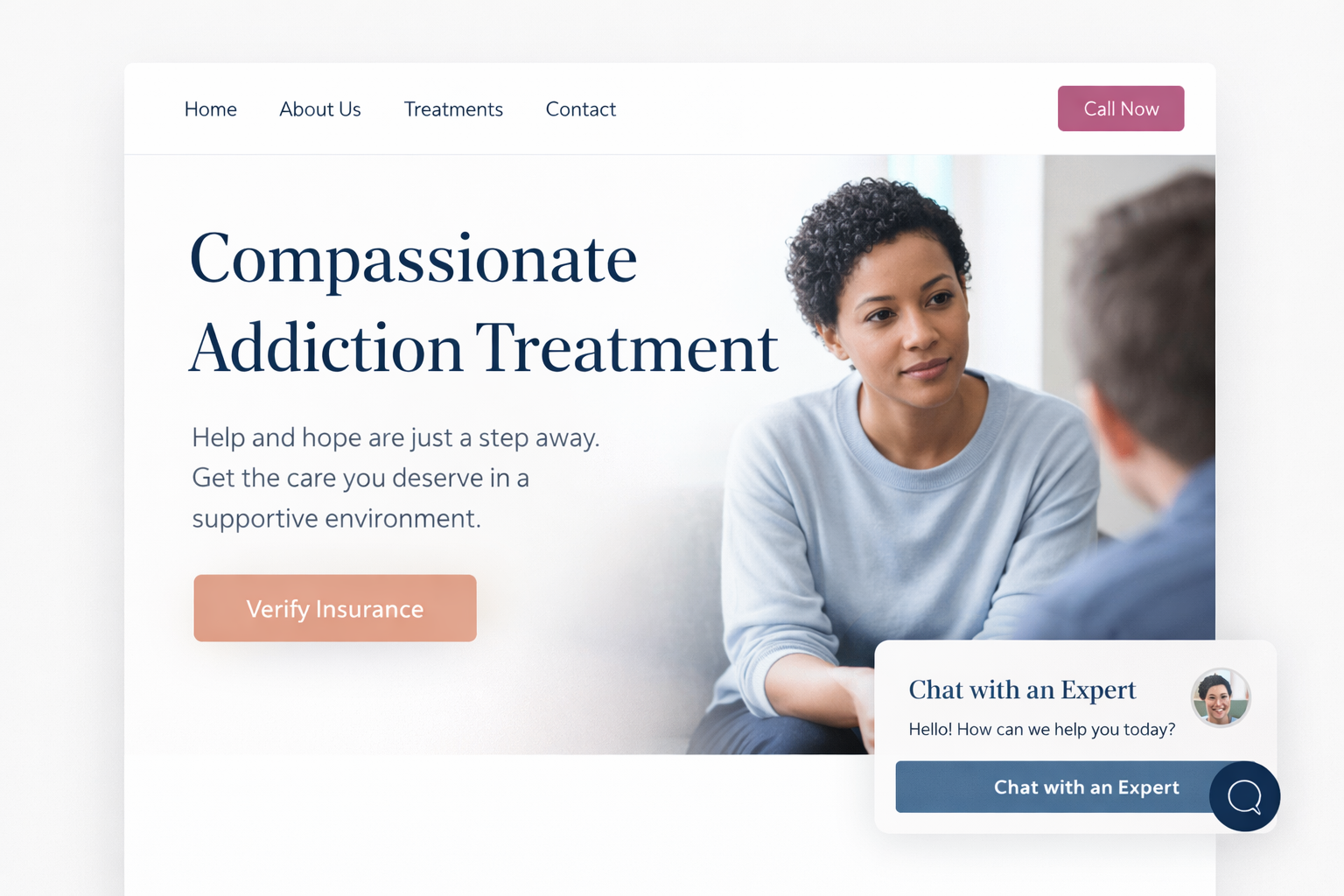
- The Urgency/Empathy Balance: The design should be calming (soft greens, warm wood tones) but the functionality must be urgent (prominent 24/7 hotline numbers).
- Insurance Clarity: One of the biggest barriers to admission is financial uncertainty. High-converting rehab website design includes an "Instant Insurance Verification" tool on the homepage.
- Confidentiality Messaging: Use "HIPAA-Compliant" and "Confidential" badges near every contact form to reassure the user that their data is protected.
4. The SEO + Design Connection
Many clinics treat healthcare marketing and web design as two separate silos. This is a mistake. Modern search engines use "Page Experience" signals to determine your rank.
Core Web Vitals 2.0
In early 2026, Google introduced the Visual Stability Index (VSI). This means if your layout "shifts" while a patient is trying to click a button, your rankings will drop. Behavioral health website design must be technically sound from the ground up to support your organic growth.
Content Structure
Your design should follow a "Silo" structure. If you offer "IOP," "PHP," and "Detox," each should have a dedicated, optimized landing page that follows a consistent conversion hierarchy. This helps Google’s AI understand your authority on these specific topics.
Conclusion
The clinics dominating the market in 2026 aren't the ones with the flashiest websites; they are the ones that have mastered the art of "Conversion-Centered Design." By focusing on speed, trust, and a frictionless user journey, you can turn your website into your most effective patient advocate.

If your current site feels like a relic of the past, it’s time to explore your options. At RxMedia, we specialize in HIPAA compliant website design that converts traffic into actual patient admits.
Reach out for a consultation today and let’s build a digital presence that reflects the quality of your care.
.png)
.png)