
Apr 11, 2026

The behavioral health landscape is more competitive and more scrutinized than ever before. For many facility owners, the digital marketing experience feels like a "black hole": thousands of dollars are poured into campaigns that return high bounce rates, low-quality leads, and a disappointing census.
In an industry where trust is the primary currency, generic marketing strategies don't just fail to convert; they can actually damage your brand’s reputation. High-performing rehab centers have moved past the "buy leads" era and have embraced a sophisticated, authority-driven model.
At RxMedia, we’ve analyzed the shift from traditional addiction treatment marketing to the new world of Generative Engine Optimization (GEO) and high-trust funnels. Here is the breakdown of why most strategies fail and what the industry leaders are doing to win.
1. The Real Problem: The "Trust Gap"
The fundamental reason most marketing for addiction treatment centers fails is a lack of perceived authority. Families in crisis are not looking for a "service provider"; they are looking for a lifeline.
Compliance and Trust Barriers
Between LegitScript requirements and Google’s strict YMYL (Your Money, Your Life) guidelines, the barriers to entry are high. Many centers fail because they treat rehab marketing like a standard retail business. If your content doesn't demonstrate deep clinical expertise and empathy, Google’s E-E-A-T (Experience, Expertise, Authoritativeness, and Trustworthiness) signals will keep you buried on page three.
Poor Positioning
Most centers position themselves as "the best." However, in a crowded market, "the best" means nothing. High-performing centers position themselves as the specialist for a specific problem—whether that is executive burnout, LGBTQ+ affirming care, or trauma-informed dual diagnosis.
2. The 5 Biggest Mistakes in Rehab Marketing
I. Generic Messaging
If you could swap your logo with a competitor’s and the website copy still makes sense, your messaging is too generic. Using phrases like "we care" or "start your journey" doesn't differentiate you in a sea of substance abuse marketing strategies.
II. Overpromising Results
Modern consumers are skeptical. Marketing that guarantees "100% success rates" or uses overly dramatic, "miracle cure" language triggers red flags for both families and search engine algorithms.
III. No Local Differentiation
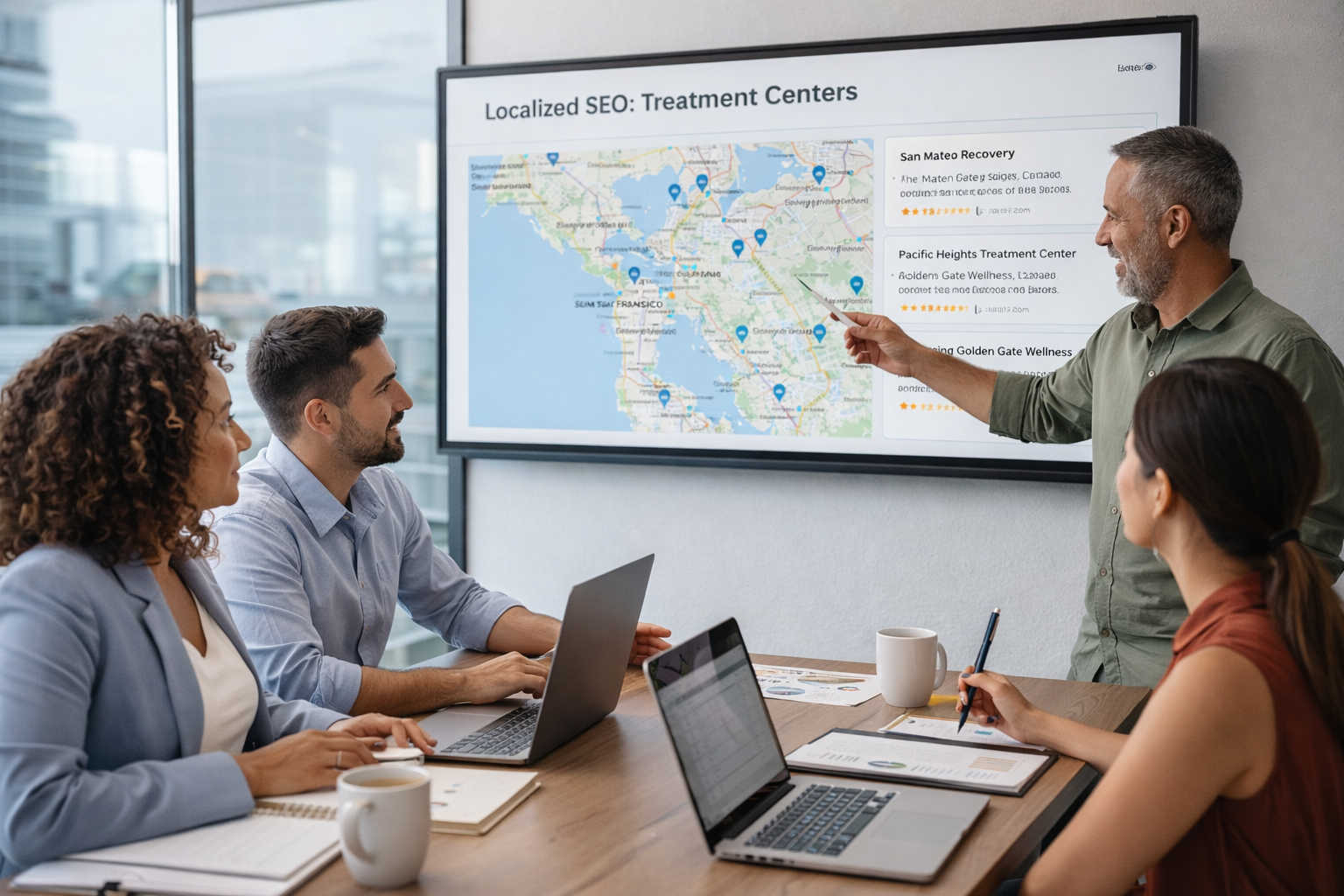
Many centers focus so much on national keywords that they ignore their own backyard. Behavioral health marketing thrives on local trust. If you aren't the dominant authority in your specific city or state, you are leaving the most "ready-to-act" leads on the table.
IV. Low-Conversion Landing Pages
Driving traffic via PPC is only half the battle. If your landing page is a cluttered mess of forms and stock photos, your cost-per-acquisition (CPA) will skyrocket.
V. Weak SEO Foundation
Relying solely on paid ads is a recipe for a fragile business. Without a robust addiction treatment center advertising strategy that includes organic SEO, your lead flow stops the second you pause your ad spend.
3. What Actually Works: The Authority Model
High-performing centers utilize a hybrid strategy that blends clinical authority with technical precision.
Authority Positioning & Storytelling
Instead of stock photos of people holding hands on a beach, elite centers use "Medical + Emotional Storytelling." This includes video interviews with clinical directors, tours of the facility, and anonymized case studies that highlight the process of recovery, not just the end result.
The SEO + PPC Hybrid Strategy
While PPC Marketing provides the immediate "inflow" of leads, SEO Marketing builds the long-term equity of the brand. According to recent search trends, AI-driven search (SGE) is now prioritizing long-form, deeply informative content over short, keyword-stuffed blogs.
Conversion-Focused Websites
A high-performing website is built on a "frictionless" user experience. This includes:
- 24/7 Accessibility: Integrated chat and clear, prominent click-to-call buttons.
- Insurance Verification: An easy, secure way for families to check coverage instantly.
- Speed: A mobile-first design that loads in under 2 seconds.

4. Case-Style Breakdown: The "Specialist" Pivot
This hypothetical scenario reflects a common successful pivot we see at RxMedia.
The Center: A 30-bed facility in the Midwest struggling with a 40% occupancy rate.
The Old Strategy: Targeting generic terms like "drug rehab" via expensive national PPC.
The RxMedia Pivot:
- Niche Identification: Shifted focus to "First Responder Trauma & Addiction."
- Content Overhaul: Created deep-dive articles on PTSD and substance use specifically for police and fire departments.
- Local Authority: Optimized their Google Business Profile to dominate local searches in a 100-mile radius.
- AEO Integration: Optimized content to answer specific questions like "How do I help a fellow officer with a drinking problem?"
The Result: Occupancy rose to 90% within six months, and the CPA dropped by 35% because the traffic was highly targeted and the "Trust Gap" was closed before the first phone call.
Conclusion
The era of "set it and forget it" rehab centers marketing is over. To thrive in today's environment, centers must bridge the gap between clinical excellence and digital authority. By avoiding generic traps and investing in a multi-channel, AI-powered marketing strategy, you can ensure that your facility isn't just seen; it's trusted.
If you are ready to stop wasting budget on underperforming campaigns, it’s time to explore your options with a partner who understands the complexities of the behavioral health world.
Reach out for a consultation today to see how we can help you help more people.
.png)
.png)